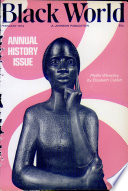
 Before social media, before viral posts, before mainstream platforms made space—however limited—for Black voices, there was Negro Digest. It was more than a publication. It was a thinking space, a cultural mirror, and a political and economic conscience for Black America during one of its most transformative eras.
Understanding Negro Digest is essential to understanding where we’ve been, where we are, and where we must go next.
What Negro Digest Was
Founded in 1942 by John H. Johnson (the same visionary behind Ebony and Jet), Negro Digest emerged as a serious intellectual publication dedicated to Black life, thought, culture, and power.
Under the editorial leadership of Hoyt Fuller, the magazine became a home for:
-
Black writers, scholars, and activists
-
Radical and revolutionary ideas
-
Honest conversations about race, economics, identity, and global Black liberation
Unlike mainstream outlets that framed Black people through a white lens, Negro Digest allowed Black thinkers to speak to one another, unfiltered.
In 1970, the magazine evolved into Black World, reflecting the growing global consciousness of the Black Power and Pan-African movements.
What Made Negro Digest Powerful
Negro Digest did something rare—and still rare today:
-
It centered Black intellect, not just Black struggle
-
It challenged respectability politics
-
It connected African Americans to global Black movements
-
It explored economics, culture, literature, and resistance together
This wasn’t surface-level commentary. It was nation-building thought.
The publication asked hard questions:
-
What does freedom actually require?
-
Who controls Black labor, land, and culture?
-
What is the responsibility of Black artists, professionals, and leaders?
Those questions remain unanswered.
Why Negro Digest Ended—and Why That Matters
By the mid-1970s, Black World was discontinued. Its unapologetic stance, radical clarity, and refusal to dilute Black political and economic thought made it uncomfortable—especially as America shifted away from collective Black movements toward individual assimilation.
What was lost wasn’t just a magazine.
It was a centralized space for Black critical thinking.