What It Was, What It Is, and What Is to Come
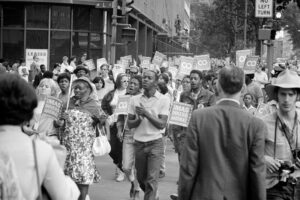
The Poor People’s Campaign stands as one of the most powerful—and often misunderstood—movements in American history. Conceived during the final years of Martin Luther King Jr.’s life, the campaign was never only about race. It was about economic justice, human dignity, and the moral responsibility of a nation to care for all its people.
At BlackProtector.com, we believe the Poor People’s Campaign is not a closed chapter. It is a continuing call to action—one that directly aligns with our mission to protect, empower, and advance Black communities in the face of persistent inequality.
What the Poor People’s Campaign Was
Launched in 1968, the Poor People’s Campaign was Dr. King’s bold effort to unite poor and working-class people across racial lines to demand:
-
Fair wages and employment opportunities
-
Decent housing
-
Access to healthcare
-
Economic rights as human rights
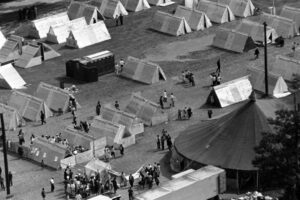
After Dr. King’s assassination, thousands gathered in Washington, DC, forming Resurrection City on the National Mall—a visible reminder that poverty was not accidental, but the result of policy choices and systemic neglect.
The campaign challenged America to confront an uncomfortable truth: civil rights without economic power are fragile.
What the Poor People’s Campaign Is
Today, the Poor People’s Campaign exists as a revived moral movement addressing the same issues—now magnified by modern realities:
-
A widening wealth gap
-
Housing insecurity and displacement
-
Low wages despite rising costs of living
-
Barriers to healthcare, education, and capital
While the language has evolved, the core message remains unchanged: poverty is not a personal failure; it is a structural problem.
The modern campaign reminds us that symbolic progress means little without material change.
What the Poor People’s Campaign Is to Come
The future of the Poor People’s Campaign will not be defined by marches alone. It will be shaped by ownership, organization, and strategy.
What comes next must include:
-
Community-based economic systems
-
Asset protection and wealth preservation
-
Education rooted in financial and legal literacy
-
Institutions that serve people, not exploit them
This is where legacy movements meet modern solutions.
How the Black Protector Group Helps Move Our People Forward
The Black Protector Group was created to do more than raise awareness. We exist to build infrastructure that protects Black people from economic harm while positioning our communities for long-term success.
1. Economic Protection & Wealth Strategy
We focus on:
-
Homeownership and real estate literacy
-
Business formation and protection
-
Estate planning and generational wealth strategies
Protection begins with ownership and preparedness.
2. Education That Leads to Action
We translate history into tools:
-
Financial education grounded in real-world outcomes
-
Legal awareness to prevent exploitation
-
Business and investment knowledge that builds independence
Knowledge without application is incomplete.
3. Collective Advancement
The Poor People’s Campaign emphasized unity. We reinforce that through:
-
Cooperative thinking
-
Shared resources
-
Community-driven solutions
No one advances alone.
4. Future-Focused Thinking
We prepare for what’s next by:
-
Supporting youth entrepreneurship and leadership
-
Encouraging legacy planning, not just survival
-
Building systems that outlast trends and moments
The Campaign Never Ended—It Evolved
Dr. King understood something that still rings true today:
Justice requires structure. Freedom requires protection. Progress requires planning.
The Poor People’s Campaign was a moral awakening.
The Black Protector Group is part of the next phase—turning that awakening into durable economic power.
Our responsibility is clear:
-
Protect our people
-
Strengthen our communities
-
Build wealth despite opposition
-
Leave something solid for the next generation
The work continues.
The mission remains.
And the future is still being written—by what we do now.